

Public relations grew, in part, out of practices associated with propaganda. The fundamental principle remains the same: a powerful narrative can change how people perceive a person or an organisation.
Strategic communications is the most sophisticated form of public relations. It goes beyond landing coverage in magazines. It means telling the same story in different ways, to different stakeholders, to drive different actions.
Publicists don’t lie. That’s the first rule of PR. Never lie to the public.
Having worked as a publicist in both Hong Kong and Shanghai, I’ve seen how differently their media landscapes operate, and how much power a narrative can hold.
The same story can produce different perceptions depending on where you encounter it.
The Great Firewall creates a significant divide between China, a country of 1.4 billion people, and the rest of the world. The divide is deep enough for people inside and outside the country to develop fundamentally different understandings of the world.
China is united by a shared written language and a powerful sense of common history. If there is one collective trauma the country continues to carry, it is the Century of Humiliation: the period of foreign invasion, territorial concessions and political subjugation from the mid-nineteenth century to the founding of the People’s Republic in 1949.
The public remembers for a long time.
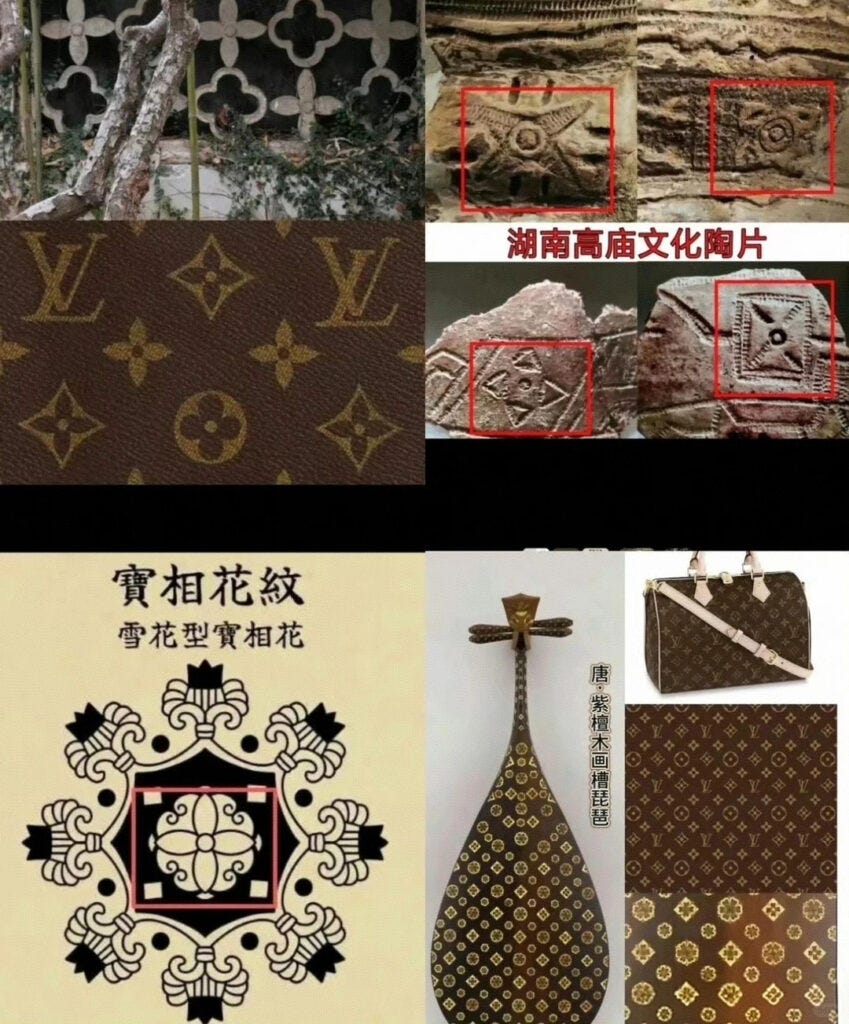
That anger surfaced again in the reaction to Louis Vuitton’s trademark victory over the Chinese tea chain Molly Tea.
Many Chinese commentators argued that the motif had existed in Chinese art and architecture for centuries, long before Louis Vuitton registered its version. One widely shared comment summed up the frustration:
“They’re just taking advantage of the fact that our ancestors didn’t file for patents.”

People around the world are wary of Chinese propaganda. Having worked inside that world, I can understand both perspectives.
Both versions contain some truth: the China you see and the China Chinese people see. Each is shaped by personal experience and by the way people understand the world around them.
Every country, government, organisation and individual does the same thing. We all tell our own side of the story.
Our worldviews are more manufactured than we realise. Some people have more freedom to tell their story. Others are trapped by the positions they have inherited. (Read The Land Trap by Mike Bird.)
For a while, I struggled to let go of the narratives I carried for my city, my people and my country.
When a narrative no longer makes sense, or when we finally wake up to a truth we have been avoiding, our experience of the world can collapse in an instant.
“You can love a country without loving the government.”
My mother said to me.
For the longest time, I thought many of the things I did were driven by an internal fight.
I felt suffocated by the role I was expected to play as one small person within a wider family network with a long political history. I had inherited the name, the expectations and the loyalties, but not the power to decide how its story was told.
I thought I was trapped.
But it has been love. It has always been love.
I love the Chinese language I grew up with. I love the farmland where I ran around playing hide-and-seek. I love the elders in my village, whom I will always respect.
Because no matter where I am, what vehicle I’m driving, what container I’m in, what corner of the city I’m living in or who I’m waking up next to, I know where home is.
I know where my people are.
I still keep a copy of a propaganda poster from a trip to Beijing. If you get the chance, visit the Propaganda Poster Art Centre in Shanghai.